

An aircon breakdown in a Singapore home is uncomfortable. An aircon breakdown in your office, retail space, or F&B outlet is a business disruption — one that affects staff productivity, customer experience, and potentially compliance with health and safety requirements.
Commercial aircon systems operate under completely different demands than residential units: longer daily run hours, greater heat load from equipment and people, and in many cases, far more complex system architecture. This guide explains what commercial aircon servicing actually involves, what a proper maintenance contract should include, and how to choose the right service partner for your business.
Key Takeaway
Commercial aircon systems run longer hours and carry higher heat loads than residential units, so they need servicing every 1–3 months rather than the typical 3–6 month residential cycle. A proper maintenance contract should specify coverage per unit, guarantee an emergency response time (4-hour or same-day is standard), use BCA-registered technicians, and include written service reports for every visit. Skipping regular servicing typically costs businesses 15–20% in excess energy use and can cut a VRV system’s lifespan from 15–20 years down to 8–10 years.
How Commercial Aircon Systems Differ From Residential
Understanding the difference helps you ask the right questions when getting quotes.
Run hours: A typical residential aircon runs 6–8 hours per day. Commercial systems in offices, restaurants, clinics, and retail outlets often run 10–16 hours — sometimes 24 hours in data centres or cold storage facilities. This dramatically accelerates wear and filter build-up.
System complexity: Residential systems are typically straightforward split units. Commercial properties commonly use:
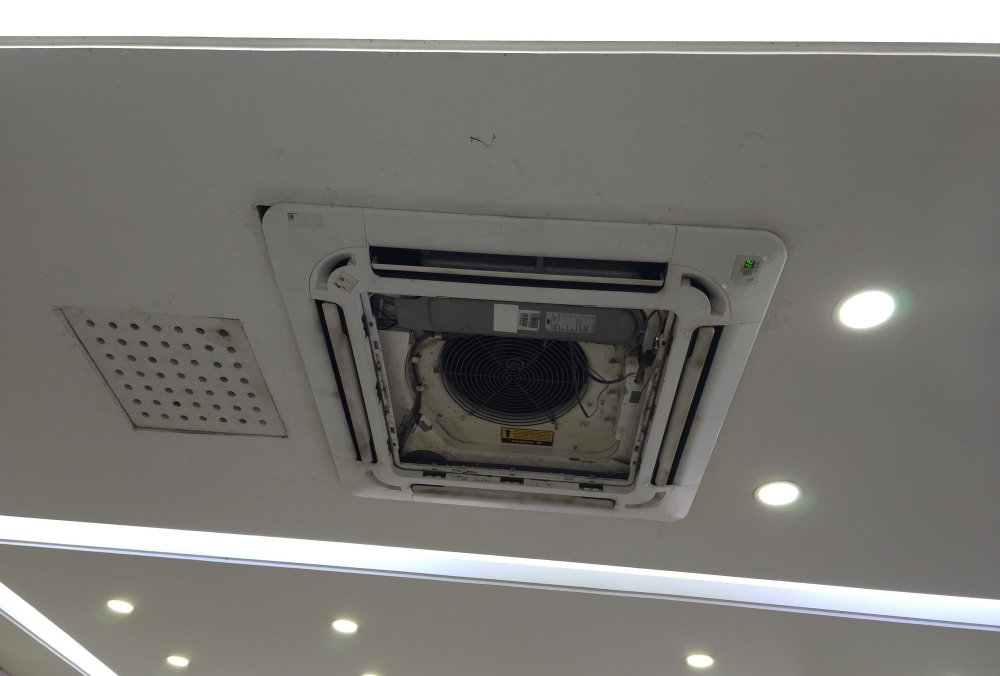
- Cassette units — Ceiling-mounted, four-directional airflow, used in offices and retail. If your office uses this system type, see our dedicated guide to cassette aircon servicing
- Ceiling-concealed units — Ducted systems where only the grilles are visible
- VRV/VRF systems — Variable Refrigerant Volume/Flow, where a single large outdoor unit serves dozens of indoor units across an entire floor or building
- Package units / rooftop units — Large standalone systems for warehouses, exhibition halls, and factories
- Chilled water systems — Central plant-based cooling for large commercial buildings (requires specialist contractors)
Maintenance frequency: Commercial systems need servicing every 1–3 months depending on the system type and usage intensity — far more frequently than the typical 3–6 month residential cycle. Newly installed commercial systems also need a proper start-up check; see our guide on aircon installation for commercial premises (suggested link — confirm live URL) for what a correct install should cover before your maintenance contract even begins.
What a Commercial Aircon Service Should Include
A standard commercial aircon service visit from a professional contractor should cover:
Indoor unit(s):
- Air filter removal, cleaning, or replacement
- Evaporator coil cleaning (spray wash or chemical, depending on frequency)
- Drainage pan and drain line inspection and clearing
- Fan motor and blower wheel inspection
- Electrical connection check
- Temperature differential check (supply air vs return air)
Outdoor condenser unit(s):
- Condenser coil cleaning
- Refrigerant pressure check
- Compressor current draw measurement
- Fan motor inspection
- Electrical safety check
VRV/VRF-specific checks:
- Branch controller diagnostics
- Refrigerant circuit balancing
- Error code retrieval and assessment
- Oil return cycle verification
For units overdue on deep cleaning, a standard wipe-down isn’t enough — see when a full chemical overhaul servicing is the better option instead of a routine visit. If a unit is losing cooling capacity between visits, low refrigerant is often the cause — our gas refill / top-up guide explains the warning signs.
Documentation: A professional contractor should provide a written service report after every visit, recording the condition of each unit, any defects identified, and recommended corrective action.
How Often Should Commercial Aircon Systems Be Serviced?
| System Type | Recommended Frequency |
|---|---|
| Office split/cassette units (standard use) | Every 1–2 months |
| F&B / restaurant kitchens (high heat + grease) | Monthly |
| Retail outlets (high foot traffic) | Every 1–2 months |
| Medical clinics / clean rooms | Monthly or more |
| VRV/VRF systems | Quarterly (with monthly filter checks) |
| Warehouses / industrial | Quarterly |
| 24/7 operations (data centres, cold storage) | Monthly minimum |
What to Look for in a Commercial Aircon Maintenance Contract
A maintenance contract gives you predictable costs, priority scheduling, and ensures servicing doesn’t fall through the cracks. When evaluating commercial contracts, check for:
Coverage clarity: Does the contract specify exactly which units are covered, how many service visits per year, and what is included in each visit versus charged extra?
Response time guarantee: What is the guaranteed response time for emergency breakdowns? For businesses, 4-hour or same-day response SLA is standard. If you’re dealing with a sudden breakdown right now rather than planning ahead, our emergency aircon repair guide covers what to check before the technician arrives.
BCA-certified technicians: Confirm that the technicians servicing your units are BCA-registered and trained for commercial systems, not just residential experience.
Documentation and reporting: Monthly or quarterly service reports are essential for building maintenance records and are often required for landlord or NEA inspections.
Parts and labour terms: Are minor parts (filters, belts, drain pan liners) included, or charged per replacement? What about refrigerant top-ups?
Exclusions: Compressor replacements, major electrical faults, and structural work are typically excluded from service contracts and billed separately. Note that piping-related issues — leaks, insulation failure, or corrosion — often fall into a grey area; our aircon piping servicing guide explains how these are usually scoped.
The Cost of Not Servicing Your Commercial Aircon
Skipping or delaying commercial aircon maintenance has real business consequences:
Higher energy bills: Dirty coils and blocked filters force the system to work harder. A commercial system operating at 15–20% reduced efficiency due to poor maintenance can cost thousands of dollars in excess electricity annually.
Unexpected breakdowns: Emergency commercial repairs on evenings or weekends attract premium call-out rates. A compressor failure on a busy Saturday for an F&B outlet means lost revenue, not just a repair bill.
Shorter system lifespan: Commercial VRV systems are significant capital investments (S$20,000–S$100,000 or more for larger installations). Poor maintenance shortens lifespan from 15–20 years to 8–10 years.
Compliance issues: NEA regulations require commercial kitchens and certain licensed premises to maintain air quality standards. A poorly maintained aircon system can affect air quality compliance.
A Facilities Manager’s Checklist: Escalation, Go 25 and Records
Build an internal escalation plan for breakdowns
A clear escalation plan closes the gap between a fault occurring and a technician arriving. Four things to put in place:
- Decide who is authorised to call for emergency service, so there’s no delay while someone tracks down approval.
- Keep your contractor’s priority-response number with facilities and security staff, not just the manager on duty.
- Make sure staff know the isolator or shutdown procedure for electrical or leak-related faults.
- Keep a basic fault log (date, symptom, unit or zone ID) so recurring issues show up before they become a pattern of disruption.
Go 25 and what it means for your aircon setup
Go 25 is a national sustainable-cooling movement launched in May 2025 by the Singapore Green Building Council and the Ministry of Sustainability and the Environment, supported by NEA and BCA. It encourages buildings to set indoor air-conditioning at 25°C or above. It’s voluntary for private businesses, though public sector premises must align with it under GreenGov.SG requirements.
A study with Ngee Ann Polytechnic found energy savings of up to 12% for each degree raised from 23°C to 25°C, with no reported drop in occupant comfort. A well-maintained system holds a higher setpoint more efficiently than one struggling with dirty coils or low refrigerant, so if you’re moving toward Go 25, ask your contractor to check thermostat calibration and airflow distribution on each routine visit.
Documentation and compliance records to keep
Keep dated service reports with before and after photos for each visit, refrigerant handling records in line with NEA requirements, technician certification records confirming BCA-registered status for every contractor on site, and your maintenance contract SLA. These are useful for internal audits and for tenancy or MCST agreements. A prioritised SLA response time is usually the single biggest lever for reducing downtime, so agree it in writing. See our commercial aircon servicing page for contract options.
City Cooling SG Commercial Aircon Services
City Cooling Engineering provides tailored commercial aircon maintenance contracts for offices, retail spaces, F&B outlets, clinics, and industrial premises across Singapore. Our commercial team handles split units, cassette systems, ceiling-concealed units, and VRV/VRF systems.
We offer flexible contract terms — monthly, quarterly, and annual — with priority breakdown response and full service documentation.
📞 WhatsApp to discuss a commercial contract: +65 9890 9677 🌐 Learn more: citycoolingengr.com.sg/commercial-aircon-servicing/